
Majlessi: The current ceasefire is based on a fragile balance. Russia is a key guarantor of stability for Iran
In an interview with Fararu, the former Iranian diplomat discusses the current ceasefire between Iran and the USA and Israel

Fararu, 29 April 2026
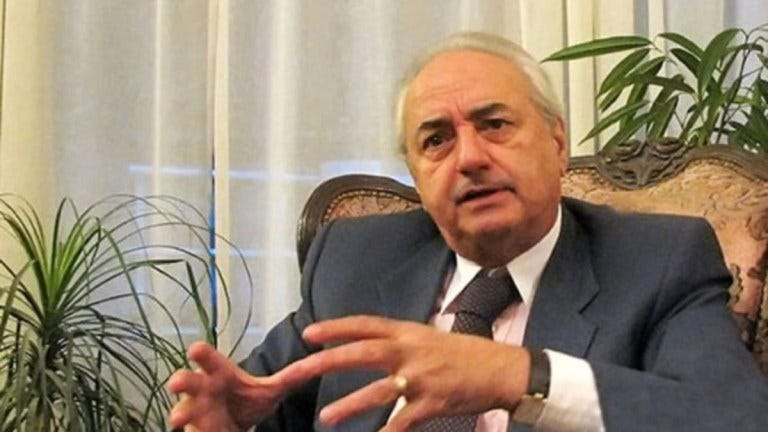
Fereydoun Majlessi, a former diplomat, says: ‘While Iran’s initiative regarding the Strait of Hormuz may serve as a temporary confidence-building measure, it is ultimately incapable of ensuring the continuation of negotiations. Contrary to political grandstanding, the role of Russia and China remains largely limited to mitigating tensions. In such a context, the current ceasefire is more than a diplomatic achievement; it is a fragile balance that could be shattered at any moment by a political decision in Washington or a shift on the ground in the Persian Gulf.
Iran is working to resolve issues and reduce tensions with the US
Fereydoun Majlessi, a veteran diplomat and senior foreign policy analyst, told Fars News: “At a time when the battlefield and diplomacy have once again become intertwined, Abbas Araghchi’s consecutive trips to Islamabad, Muscat and Moscow must be viewed as more than routine diplomatic moves. They are an attempt to redefine the “deterrence/negotiation equation” during one of the most complex phases of Iran–U.S. relations. The existing ceasefire is a kind of “operational pause” that could collapse at any moment under pressure from shifting on-the-ground and political variables.
The reality is that the Islamabad talks, initiated with the aim of ending the war and restoring vital energy routes, have effectively reached an impasse; even direct meetings have been cancelled due to fundamental differences. In this context, Araghchi’s shuttle diplomacy between Pakistan and Oman is not a sign of progress, but rather a form of ‘multi-layered mediation’ seeking to narrow the strategic gap between Tehran and Washington through third-party actors.”
Majlessi added: “Oman has maintained its traditional role as a secure channel of communication, and talks in Muscat have primarily focused on crisis management in the Strait of Hormuz, with Iran attempting to raise the issue of maritime security as a starting point for a phased agreement. Aragchi’s message regarding ‘finding a safe passage through the Strait of Hormuz’ must be understood within this framework. It is not merely a technical position on maritime security, but a ‘comprehensive proposal’. Tehran is ready to return the world’s energy hub to a state of semi-normalcy, provided that Washington also backs off from maximum military and economic pressure. Evidence suggests that Iran has proposed decoupling the reopening of the Strait of Hormuz from the nuclear talks in order to pave the way for a faster agreement. This is the very logic of ‘decoupling issues’ recognised in literature on crisis diplomacy as a conflict-reduction tactic.
Russia is a key guarantor of balance for Iran
This veteran Iranian diplomat continued: ‘The Strait of Hormuz issue is more than just a technical matter; it is a geopolitical lever. Iran uses this lever to exert pressure, and the United States is attempting to neutralise this lever by maintaining a military presence and continuing a form of naval blockade. Therefore, any agreement regarding the Strait of Hormuz will, by its very nature, be temporary and dependent on the balance of power in the region rather than providing a lasting guarantee. In this context, the trip to Moscow takes on added significance. Under current conditions, Russia is not merely a political partner, but a ‘regional guarantor of balance’ for Iran. Araghchi’s meeting with Russian officials comes at a time when negotiations with the US have stalled and Tehran is seeking to strengthen its strategic support. However, we must be realistic: Russia is not inclined to directly confront the United States, and its role is more defined in terms of crisis management and preventing the escalation of tensions than in guaranteeing a comprehensive agreement.
He added, ‘China can also be analysed within this framework. On the one hand, Beijing is heavily dependent on stability in the Strait of Hormuz and the flow of energy; on the other, it is not inclined to become embroiled in direct geopolitical confrontation. Data indicates that China deliberately relies on limited diplomatic and economic support and refrains from making broad security commitments. Therefore, contrary to popular belief, neither Russia nor China is capable of serving as an ‘absolute guarantor’ of the ceasefire. Ultimately, their role is defined by mitigating the costs of diplomatic failure. Conversely, the United States’ behaviour also exhibits notable contradictions. While there are signs of a willingness to de-escalate the crisis and extend the ceasefire, the rhetoric of threats and pressure continues. Donald Trump’s statements regarding telephone negotiations, alongside the cancellation of the U.S. delegation’s visit, suggest a form of ‘asymmetric diplomacy’, whereby Washington seeks to maintain the initiative without making concessions.